 Whitehall Endeavours
Property
Tokenisation of Property
For decades, property investing followed a straightforward approach: buy, rent, hold, and wait. However, the current landscape is evolving dramatically.
Rising borrowing costs, shifting regulations, and emerging sustainability standards are constraining traditional yields. At the same time, advancements in digital finance, AI, and blockchain are reshaping capital flows across borders and asset classes.
Among these advancements, real estate tokenisation stands out. It is no longer just a buzzword; it represents a transformative model that is redefining how investors access, trade, and scale ownership globally.
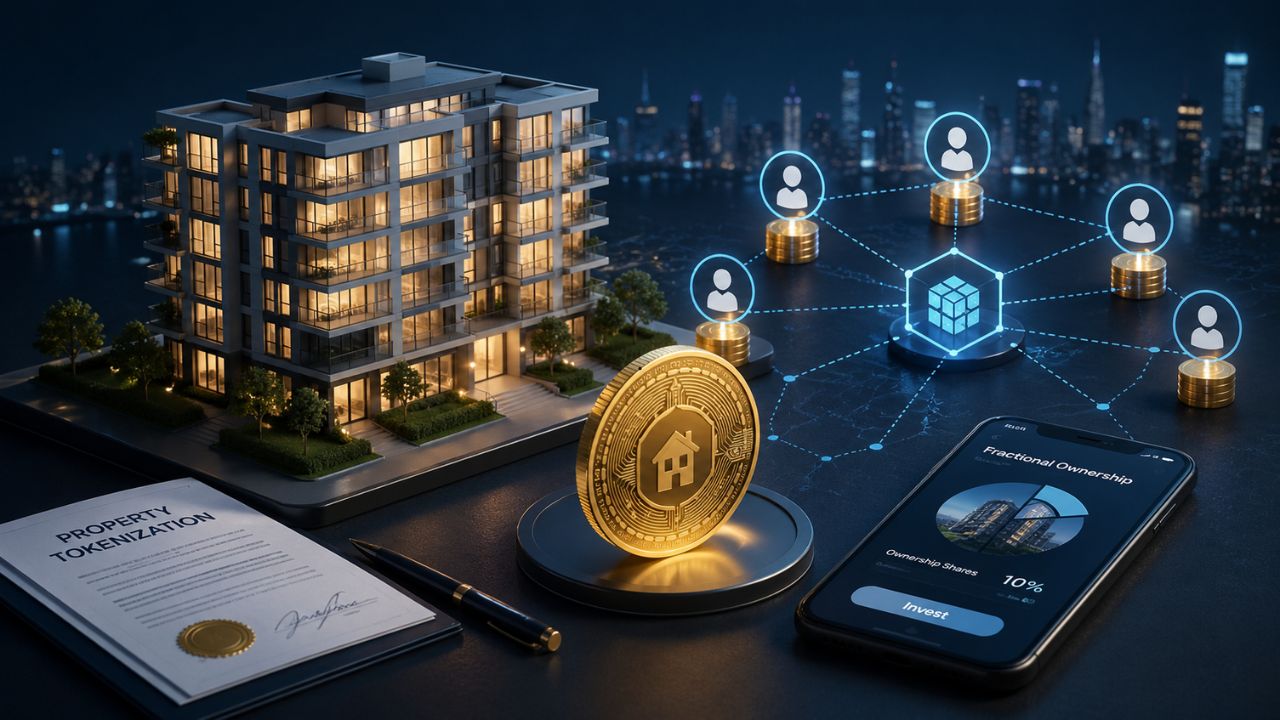
Tokenisation transforms ownership of real assets—such as a condominium in Dubai, a warehouse in Frankfurt, or office space in Singapore—into digital shares (or tokens) recorded securely on a blockchain.
Each token signifies fractional ownership, with transactions verified in real-time, establishing a tamper-proof record of ownership.
This conversion renders previously illiquid property into programmable capital, allowing for trade, division, and global accessibility.
Various platforms in Europe and the U.S. illustrate that tokenized real estate is not just theoretical; it attracts investors, developers, and institutions seeking transparent, compliant, and liquid alternatives to legacy systems.